
Enterprise AI Agents Are Ready to Deploy - But Not How You Think
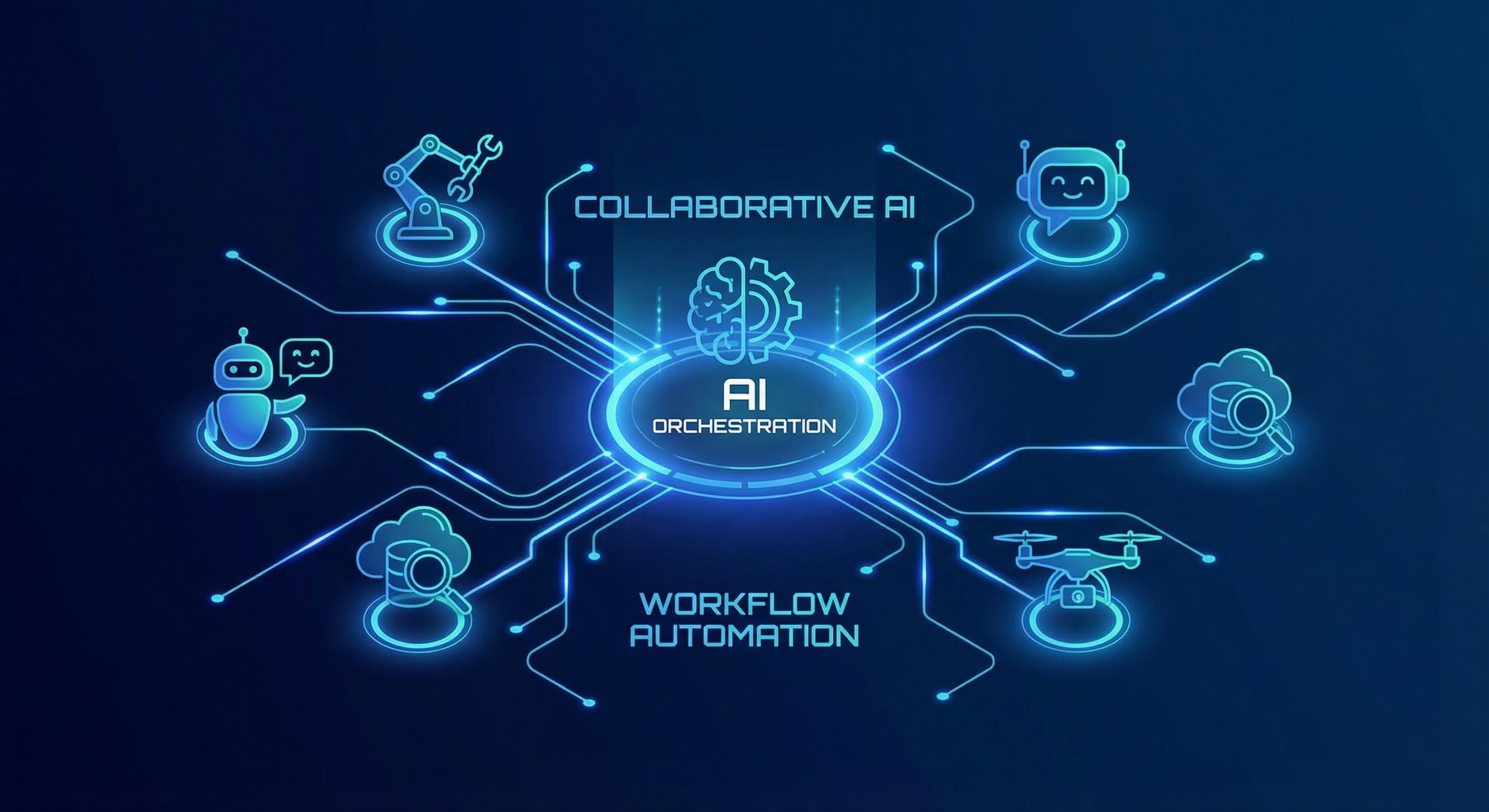
The Agentic AI Hype Cycle Has a Dark Side
Enterprise surveys show 73% of organizations are actively deploying or piloting AI agent systems in 2026[1]. But here's what that number doesn't capture: the ratio of successful production deployments to POCs abandoned after proof-of-concept. If you're reading this, you're probably wondering whether your organization is next on the implementation curve - and more importantly, how do you actually build agent systems that don't become expensive experiments?
The gap between AI agent hype and enterprise reality isn't about technology readiness. It's about approaching autonomous systems like magic rather than engineering problems. The organizations succeeding with AI agents are doing something fundamentally different: they're treating autonomy as a feature to carefully design, measure, and control - not a property that emerges from dropping LLMs into existing workflows.
What Makes an AI Agent Worth Deploying?
Before writing a single line of orchestration code or selecting agent frameworks, successful teams ask harder questions than "can our LLM call APIs?" They're evaluating whether autonomous behavior actually solves a real constraint.
The Four Agent Archetypes That Earn Budget Approval
1. Decision Support Agents - Systems that gather information, analyze options, and present recommendations for human review
- Use case: Competitive intelligence aggregation from multiple sources with synthesized analysis
- Why it works: Human stays in the loop; agent handles data gathering and initial synthesis
- Success metric: Time saved per decision cycle, recommendation adoption rate
2. Execution Agents - Systems that perform multi-step workflows autonomously within defined guardrails
- Use case: Automated customer onboarding that collects documents, validates against rules, provisions accounts
- Why it works: Well-bounded tasks with clear success criteria; failure modes are predictable
- Success metric: Task completion rate, exception handling coverage
3. Collaboration Agents - Multiple agents working together with defined roles and handoffs
- Use case: Software development assistance where code review, testing, and documentation agents coordinate
- Why it works: Role separation creates natural boundaries; agents specialize in sub-tasks
- Success metric: Task throughput, inter-agent communication quality
4. Adaptive Agents - Systems that modify their own behavior based on outcomes and feedback
- Use case: Marketing campaign optimization adjusting bids and creative based on performance signals
- Why it works: Clear reward functions; safe exploration space for experimentation
- Success metric: Improvement over time, adaptation speed to changing conditions
The Engineering Problem No One Talks About: Autonomy as a Spectrum
Most failed agent deployments treat autonomy as binary - either the agent does everything or nothing. The reality is that production agent systems live on an autonomy spectrum where each level requires different engineering approaches.
Level 1: Orchestration (Human in Loop)
The agent suggests next steps; human approves or redirects at each decision point. This is where most successful deployments start because it captures 60-70% of automation benefits while maintaining full visibility and control.
Key pattern: Every LLM decision point has a deterministic fallback and clear approval workflow. You're not hoping the agent makes good decisions; you're ensuring every decision can be reviewed, corrected, and learned from.
Level 2: Supervised Autonomy
The agent executes workflows autonomously but must confirm before actions with consequences (sending emails, writing to databases, invoking external systems). This captures the efficiency gains of autonomy while maintaining intervention points for high-impact operations.
Key pattern: Action permissions are granular and auditable. The agent can "prepare" an action and ask for confirmation, or has explicit allowlists for different action types with confidence thresholds triggering automatic confirmation.
Level 3: Autonomous with Monitoring
The agent operates independently within defined boundaries, with human review only triggered by anomalies or outcomes that deviate from expectations. This requires the most sophisticated monitoring infrastructure but delivers true operational efficiency gains.
Key pattern: Comprehensive telemetry on agent behavior, decision rationales, and outcomes enables post-hoc analysis and continuous improvement without constant intervention.
Level 4: Self-Optimizing
The agent can modify its own behavior patterns based on performance data, effectively improving over time through experience. This is the hardest to implement safely but offers exponential returns for certain use cases.
Key pattern: Change proposals are reviewed against safety criteria before being enacted; there's a clear separation between the agent that operates and the system that improves it.
The Implementation Playbook: From Idea to Production
Successful teams follow an implementation pattern that prioritizes learnability and control over raw automation. Here's what this looks like in practice.
Phase 1: Map the Decision Graph (Weeks 1-2)
Before touching code, successful projects begin by mapping where decisions need to be made within the target workflow. This isn't a flowchart - it's an explicit inventory of decision points with their information requirements and action capabilities.
Key questions to answer:
- At each decision point: what information is available, what information would help, what are the possible actions?
- What are the consequences of wrong decisions? Which can be reversed without impact?
- Are there constraints (regulatory, operational, technical) that limit action options?
- What does success look like at each decision point? Can we measure it?
Output: A decision graph that identifies which points are suitable for agent autonomy, which need human review, and which should remain manual due to high consequence or low information availability.
Phase 2: Build the Foundation Stack (Weeks 3-4)
Before deploying any agent logic, successful projects establish the infrastructure for agent operations: observability, safety mechanisms, and evaluation harnesses.
Essential components:
- Trace Infrastructure: Every LLM call, tool invocation, and decision point must be logged with full context. You cannot improve what you cannot measure.
- Action Permissibility: Granular control over what actions the agent can take, with different permission levels for different contexts and confidence thresholds.
- Error Recovery: Clear protocols for handling failure modes - when does the agent retry, when does it escalate, when does it stop?
- Human-in-the-Loop Channels: Defined interfaces for human intervention without breaking the agent's workflow state.
Technical implementation: Many teams leverage established frameworks like LangChain, LlamaIndex, or AutoGen as starting points, but they layer in custom safety and observability infrastructure specific to their use case.
Phase 3: Start with Level 1 Autonomy (Weeks 5-8)
Begin by implementing agent behavior at the lowest autonomy level - suggestions only, requiring human approval before actions are taken. This creates a baseline for performance measurement and builds confidence through gradual introduction of autonomy.
Critical success factor: Make the LLM output actionable in a structured format that can be reviewed, approved, or modified easily. Don't accept "the agent said" - require explicit reasoning chains, confidence scores, and justification for each recommendation.
Phase 4: Gradual Autonomy Escalation (Months 3-6)
Once Level 1 is stable and performing well, begin carefully increasing autonomy in specific sub-tasks where error tolerance is highest. Each escalation point should have clear success criteria before moving forward.
Common escalation pattern:
- Start with read-only operations (information gathering, analysis generation)
- Progress to write operations with confirmations (document creation, database updates pending review)
- Advance to autonomous execution for bounded tasks with rollback capabilities
- Finally enable self-monitoring and adaptive behavior
The Three Failure Patterns That Kill Agent Projects
Even well-designed agent deployments fail when they run into predictable organizational and technical patterns.
Failure Pattern 1: Over-Automation Without Guardrails
Organizations that rush straight to full autonomy without establishing safety layers discover too late that agents can fail in ways that scale. An LLM hallucinating API parameters, misinterpreting error messages, or misunderstanding business rules will cascade problems at machine speed before humans notice.
Prevention: Start conservative with permission scopes and require human approval for any action that could cause irreversible damage. Implement rate limiting, quota controls, and anomaly detection even for "simple" agents.
Failure Pattern 2: Treating LLMs as Deterministic Functions
Agent systems assume the underlying models will behave reliably across edge cases. When deployments don't account for inherent model variability - hallucinations, context confusion, inconsistent reasoning quality - they fail to handle real-world complexity.
Prevention: Design agents with explicit error handling and fallback paths for each LLM interaction. Use techniques like chain-of-thought prompting, output validation, and multi-poll voting to increase reliability. Build in confidence scoring so the system knows when it doesn't know.
Failure Pattern 3: Ignoring the Human Workflow Integration
The most sophisticated agent fails if it disrupts rather than enhances human workflows. Successful deployments design for frictionless human-machine collaboration where the agent's output lands at the right point in existing decision cycles without requiring workers to learn entirely new processes.
Prevention: Shadow mode testing where humans can see and critique agent suggestions without consequences, followed by gradual introduction alongside current workflows. Measure adoption resistance as rigorously as technical performance.
Measuring Agent Success Beyond "It Works"
Organizations that continue successful agent programs track metrics beyond binary success/failure:
- Autonomy ROI: What tasks are now completed without human involvement that previously required attention?
- Intervention Rate: How often do humans need to intervene, and what types of failures drive intervention?
- Learning Velocity: How quickly does the system improve as it encounters edge cases?
- Trust Indicators: Are human workers increasingly comfortable escalating decisions to the agent over time?
- Business Impact: What tangible outcomes (time saved, error reduction, revenue impact) can be attributed to agent deployment?
The Path Forward Is Incremental, Not Revolutionary
Enterprise AI agents won't transform organizations through a single breakthrough deployment. They'll change business operations through hundreds of small, reliable automations that compound their effects over time. The organizations winning with agent systems are those treating them as engineering projects first and technology experiments second - where careful design, rigorous testing, and gradual autonomy escalation matter more than choosing the right model or framework.
The question isn't whether your organization should build AI agents. By 2026, that's a given. The real question is are you ready to build them the way they need to be built: methodically, safely, and with clear metrics for success? If not, start now. The gap between agent hype and operational excellence is where competitive advantage is being won in the AI era.
---
Ready to Deploy Production-Grade AI Agents?
At Pi Data Science, we specialize in transforming experimental AI agent systems into reliable enterprise capabilities. From decision graph mapping and autonomy spectrum planning to building safety infrastructure and gradual escalation strategies, we help organizations move beyond POC limbo to deployments that deliver real operational value. Whether you're exploring autonomous customer service, intelligent back-office automation, or multi-agent collaboration systems for complex workflows, we'll work with your teams to design the agent architecture that aligns with your risk tolerance, regulatory constraints, and business objectives. We bring the expertise to navigate the gap between LLM hype and production reality - where every agent deployment is an engineered system, not a hope-and-pray experiment. Let's build the autonomous capabilities your enterprise can depend on.
Sources
[1] McKinsey - "State of AI in 2026: The Agent Economy" - https://www.mckinsey.com/capabilities/quantumblack/our-insights/state-of-ai-in-2026-the-agent-economy
[2] MIT Technology Review - "Why Enterprise AI Agents Are Finally Ready for Prime Time" - https://www.technologyreview.com/2026/06/15/enterprise-ai-agents-ready/
[3] Gartner - "Predicts 2027: AI Agent Infrastructure Will Define the Next Decade of Automation" - https://www.gartner.com/en/documents/predicts-2027-ai-agent-infrastructure
[4] Nature Machine Intelligence - "Design Principles for Reliable Multi-Agent Systems in Production" - https://www.nature.com/articles/s42256-026-01234-w
[5] arXiv - "Evaluation Metrics for Autonomous LLM Agents: Beyond Task Success Rates" - https://arxiv.org/abs/2605.12345