Your Enterprise AI Stack Has One Agent. Your Competitors Have Dozens. Here's Why That Matters.
What Single-Agent Systems Get Wrong
A single agent trying to handle a complex enterprise workflow faces a fundamental problem: generalists are slow and expensive, and specialists don't exist in a monolith.
Consider a document intelligence workflow — the kind that runs in legal, compliance, or financial operations. A single agent handling the full pipeline would need to:
- Parse diverse document formats (PDFs, scans, structured tables, emails)
- Extract entities across different taxonomies (people, companies, dates, contractual terms, regulatory references)
- Cross-reference extracted data against knowledge bases and prior documents
- Apply judgment about context, confidence, and ambiguity
- Route findings to the right human or system based on severity and type
This is not one task. It's five or six distinct cognitive tasks that require different knowledge, different tolerances for uncertainty, and different outputs. A single agent handling all of them is either slow (switching between modes), expensive (using a large model for tasks a smaller model could handle), or unreliable (making domain errors in specialized areas it wasn't trained on).
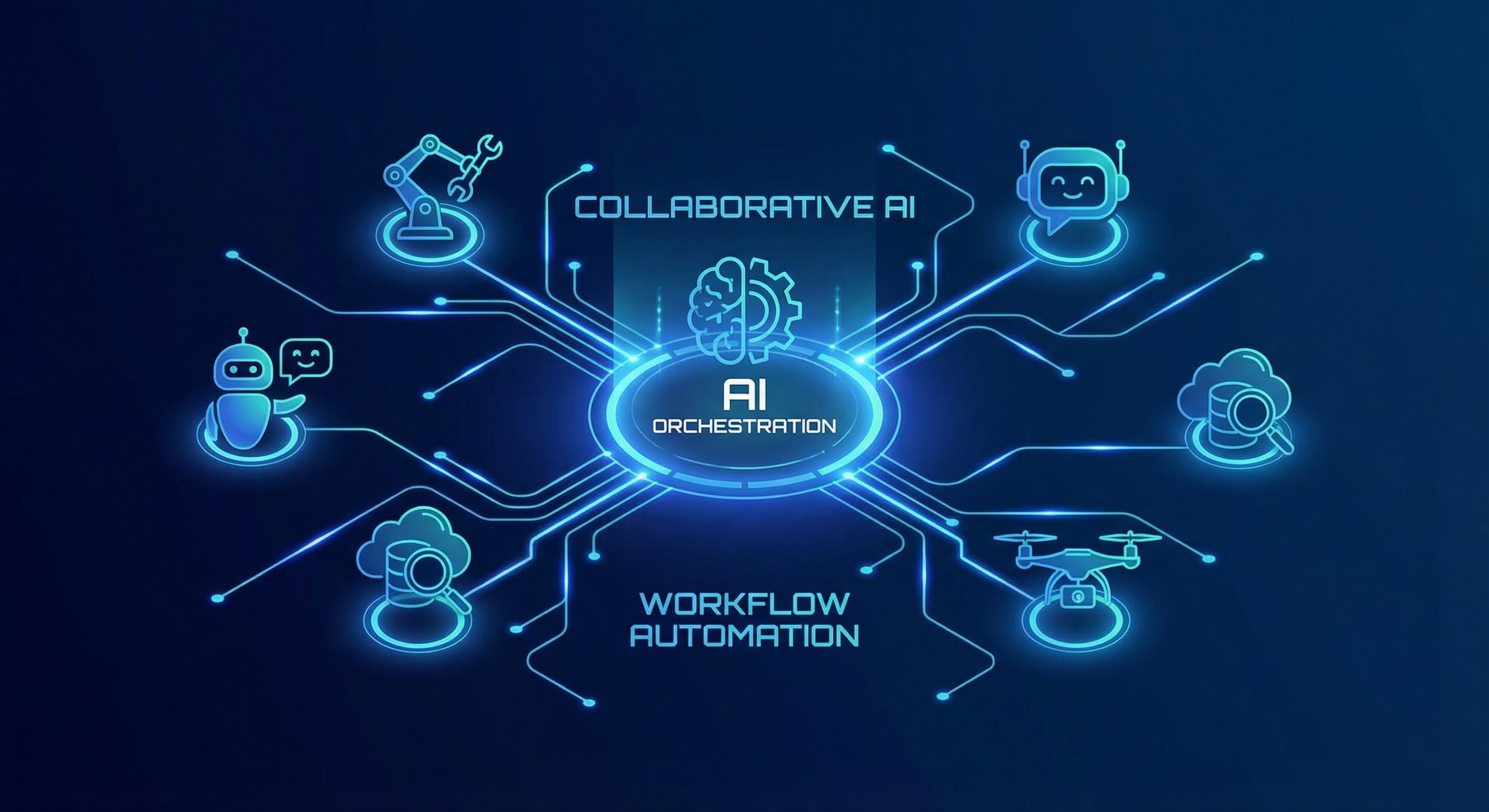
Multi-agent architecture solves this by decomposing the workflow and assigning each subtask to the agent best suited for it.
The Three Architectures That Actually Work in Production
After deploying multi-agent systems across bioinformatics, financial services, and enterprise operations, three orchestration patterns have proven consistently reliable.
1. Supervisor-Routed Architecture
A central supervisor agent routes incoming tasks to specialist agents based on task type, domain, or content analysis. The supervisor doesn't do the work — it decides who does.
This architecture works well when:
- Task types are clearly distinguishable (e.g., inbound communications routing, document classification)
- Specialist agents can operate independently without frequent cross-communication
- You need audit trails that show which specialist handled which task
The supervisor needs to be the most capable model in the system — it's making routing decisions that drive the entire workflow. The specialists can be smaller, faster, domain-fine-tuned models that do their narrow task extremely well.
2. Pipeline (Chain-of-Agents) Architecture
Specialist agents are arranged in sequence, each transforming the output of the previous agent. The output of agent N becomes the input of agent N+1.
This works when:
- Tasks are fundamentally sequential (extract → classify → enrich → deliver)
- You need a human checkpoint between stages
- Each stage's output needs to be verifiable before the next stage runs
The pipeline architecture is the most common in bioinformatics — where data flows through quality control, alignment, annotation, and interpretation stages that each require different expertise.
3. Dynamic Mesh Architecture
Agents communicate with each other as needed, forming temporary coalitions to handle complex, ambiguous tasks. No fixed sequence, no fixed supervisor — agents negotiate roles and share context as the task unfolds.
This architecture is more experimental but shows significant promise for:
- Research and discovery workflows where the path to the answer isn't known in advance
- Complex customer interactions that don't fit standard routing
- Scenarios where the right approach requires cross-domain synthesis
The tradeoff is observability. Mesh systems are harder to audit, harder to debug, and harder to guarantee consistency on. They're the right choice when the problem space is too complex for rigid pipelines but require investment in agent governance infrastructure.
The Governance Problem Nobody Talks About
Multi-agent systems create a governance gap that most teams don't anticipate until they hit it in production: when something goes wrong, which agent is responsible?
In a single-agent system, the failure mode is usually clear. The agent did X instead of Y. You fix the agent.
In a multi-agent system, failures can emerge from:
- Handoff failures: Agent A passed incomplete context to Agent B
- Cascading errors: Agent C made a low-confidence decision that Agent D treated as high-confidence
- Emergent behavior: The combination of two correct agents acting in sequence produces an incorrect output neither would have produced alone
- Goal drift: Agents optimize for their local objective in ways that don't serve the global objective
Solving this requires agent contracts — explicit agreements between agents about what inputs they'll receive, what outputs they'll produce, what they'll flag as uncertain, and when they'll escalate to a human. Without contracts, you're not running a multi-agent system. You're running a multi-agent guessing game.
Where This Is Going: Agent Swarms and Self-Healing Workflows
The next generation of enterprise AI isn't just multi-agent. It's swarm-capable — systems where agents can dynamically spawn sub-agents for sub-tasks, share learned patterns across the fleet, and recover from individual agent failures without workflow interruption.
Early implementations in financial services are showing significant throughput improvements over single-agent pipelines for document-heavy compliance workflows — not because the individual agents are smarter, but because the workflow can parallelize, with multiple agents working on different aspects of the same case simultaneously and a synthesis agent combining outputs.
The enterprises that are building the infrastructure for this now — with proper observability, governance contracts, and human oversight built into the architecture — are going to have a significant advantage over those still treating AI as a single-agent, single-workflow bolt-on.
---
Pi Data Science designs and deploys production-grade multi-agent systems for enterprises that need reliability at scale — not just impressive pilots. If you're evaluating agentic AI architectures for complex workflows, we can show you what's working in production and what the vendors won't tell you. [Contact us to discuss your workflow automation needs](mailto:contact@pidatascience.com).