
Your RAG System Is Broken. Agentic Retrieval Fixes It.
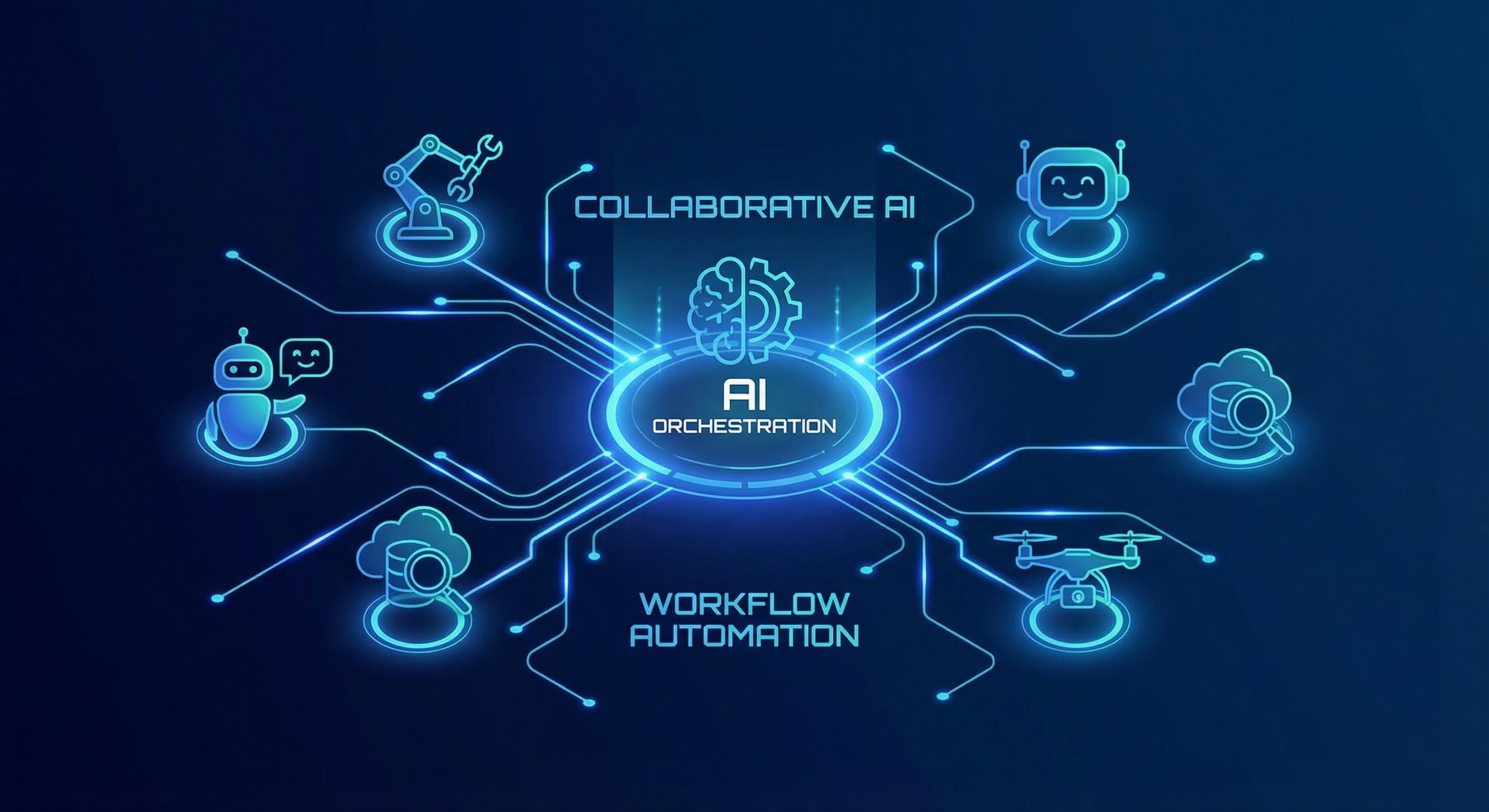
Why Your RAG System Keeps Getting Embarrassingly Wrong Answers
You've built a RAG system. You've indexed your documents. You've connected it to a capable LLM. And yet — the answers it produces are confidently incorrect, citing the wrong sections, hallucinating details that aren't in your corpus, or returning "I couldn't find relevant information" when the answer is sitting in a PDF three clicks deep in your knowledge base.
This isn't a model problem. It's an architecture problem.
The standard RAG pattern — embed query, find top-k chunks, stuff them into context, generate answer — was a reasonable first pass. But it was designed for demo environments, not the messy reality of enterprise knowledge: distributed across dozens of document types, inconsistent metadata, conflicting information across versions, and queries whose intent requires synthesis across multiple sources.
The enterprises that have moved past basic RAG are building something fundamentally different. They're building agentic retrieval systems — multi-agent architectures where retrieval is not a one-shot operation but a planned, iterative, self-correcting process.
The Four Failure Modes That Break Standard RAG
Before understanding the fix, it's worth being precise about what's actually going wrong.
Failure Mode 1: Semantic Drift in Dense Retrieval
Dense embeddings excel at surface-level semantic similarity. They struggle when:
- The query uses different vocabulary than the documents (synonym mismatch)
- The relevant information is in a different section than where the query terms appear
- The answer requires combining information from two documents that don't share vocabulary
Dense retrieval is also brittle to chunk boundaries. If a critical piece of context sits across two chunks — the table on page 3 and the caveat on page 7 — neither chunk alone contains enough signal to rank highly, even if a human reading both would find the answer immediately.
Failure Mode 2: No Query Planning
Standard RAG treats every query as equal: embed, retrieve, generate. But real queries have structure:
- A question might be ambiguous and require clarification before retrieval
- A complex query might decompose into sub-queries that need to run in parallel or sequence
- A query might require consulting a specific document type (contracts, SOPs, prior cases) before others
Without query planning, you're relying on the retrieval system to somehow figure this out from the query string alone — which it can't.
Failure Mode 3: No Self-Correction Mechanism
Standard RAG has no mechanism to question its own retrieval results. If the top-k chunks don't actually answer the question, the system proceeds anyway and generates an answer from inadequate context. The result is confident-sounding nonsense.
Human researchers don't work this way. They form a hypothesis, find evidence, evaluate whether the evidence supports the hypothesis, and if it doesn't, they go back and look again. Basic RAG skips the evaluate-and-revise loop entirely.
Failure Mode 4: Single-Stage Retrieval for Multi-Hop Problems
Many enterprise questions require multi-hop reasoning: the answer to "Did Acme Corp meet its Q3 obligations under the master agreement?" requires knowing (a) what the master agreement says about obligations, (b) what happened in Q3, and (c) whether those events satisfy the contractual language. This can't be answered from a single retrieval pass.
Agentic Retrieval: A Different Mental Model
Agentic retrieval replaces the one-shot "embed-and-retrieve" pattern with a closed-loop retrieval process managed by one or more specialized agents. The key shift is that retrieval becomes a first-class computational step — planned, executed, evaluated, and revised — rather than a single deterministic operation.
The Core Loop
An agentic retrieval system follows a structure like this:
- Query analysis and planning: The agent decomposes the query, identifies information requirements, and generates a retrieval plan.
- Planned retrieval execution: Retrieval actions are executed according to the plan — possibly in parallel across different sources, document types, or query reformulations.
- Context evaluation: The agent evaluates whether retrieved context actually answers the query, not just whether it's topically relevant.
- Self-correction and iteration: If context is inadequate, the agent reformulates the query, expands or narrows scope, and retrieves again.
- Synthesis: Retrieved and verified context is passed to the generation stage.
Each step can involve a different agent with different capabilities. The system that manages this — routing, state tracking, and coordination — is itself an agent: the retrieval supervisor.
Architecture Patterns for Agentic Retrieval
Pattern 1: Query Decomposition with Sub-Agent Routing
For complex queries, a decomposition agent breaks the query into sub-questions, routes each to the appropriate retrieval source or tool, and synthesizes results. This is particularly powerful when different sub-questions require different retrieval strategies — one might need keyword search over contracts, another might need vector search over technical documentation.
The decomposition agent doesn't just parallelize retrieval; it creates a retrieval plan that encodes the dependency structure between sub-questions.
Pattern 2: Iterative Retrieval with Self-Correction
A self-correcting retrieval agent operates in a loop:
- Retrieve initial context
- Evaluate: does this context contain sufficient evidence to answer the query?
- If insufficient: identify what's missing, reformulate the query, retrieve again
- Repeat until context is adequate or a defined retry limit is reached
This requires the agent to have a mechanism for evaluating its own retrieval quality — typically a secondary model call that assesses whether retrieved chunks actually support the intended answer. When they don't, the system knows to try again with a different approach.
Pattern 3: Memory-Augmented Retrieval
Static retrieval from document corpora ignores a critical source of context: prior interactions. A memory-augmented retrieval system tracks the retrieval history for a given session or user, maintaining state across multiple queries that build on each other.
This is particularly valuable in investigative workflows — compliance reviews, contract analysis, research synthesis — where a second question often depends on information discovered during a first query. Memory augmentation allows the system to carry forward relevant context from earlier retrieval rounds.
Pattern 4: Tool-Mediated Retrieval with Guardrails
Agentic retrieval systems can use tools beyond vector search: web search, structured database queries, API calls to internal systems, code execution for data manipulation. The agent decides which tools to use based on the query requirements.
This requires guardrails — the system needs to know which tools are appropriate for which query types, what rate limits apply, and when to escalate to a human. Without these guardrails, tool-augmented retrieval becomes unreliable at best and a security surface at worst.
Building Agentic RAG: A Practical Architecture
The gap between "standard RAG" and "agentic RAG" is primarily an architectural one — it doesn't require exotic models or specialized infrastructure. Here's what the architecture looks like in practice.
Component Architecture
Retrieval Supervisor Agent
The supervisor owns the top-level retrieval loop. It receives the user query, generates a retrieval plan, dispatches sub-agents, evaluates their outputs, and decides whether to continue iterating or proceed to synthesis.
Specialist Sub-Agents
Each sub-agent is specialized for a specific retrieval modality or document type:
- A contract-retrieval agent optimized for legal document retrieval
- A technical-documentation agent with domain-specific embeddings
- A structured-data agent that can query databases or execute SQL
- A web-search agent for queries requiring external information
Context Memory Store
A persistent store of retrieved and verified context for the current session. This is not the document store — it's a working memory that accumulates verified context as the retrieval loop progresses.
Evaluation Model
A lightweight model call that evaluates whether retrieved context adequately answers the current query. This is the self-correction mechanism — without it, the system has no way to know when retrieval has failed.
The Evaluation Signal That Makes Self-Correction Work
The hardest part of agentic retrieval is the evaluation step. How does the system know whether retrieved context is actually sufficient?
Two patterns work in practice:
Grounded answer generation: Generate a draft answer from retrieved context, then ask a secondary model whether the draft answer is supported by the context. If the secondary model finds unsupported claims, those claims become new retrieval targets.
Claim decomposition: Decompose the query into specific claims that need to be verified, then for each claim, retrieve evidence and assess whether the evidence supports it. Claims without sufficient support trigger additional retrieval.
Both patterns require an evaluation model that is itself reliable — which is why careful prompt engineering and, where possible, domain-specific fine-tuning matter significantly here.
Where Agentic Retrieval Delivers Most Value
Agentic retrieval is not universally better than basic RAG. The additional complexity is justified when:
Query complexity is high: Multi-hop questions, ambiguous queries, or queries requiring synthesis across document types benefit most. Simple factual queries ("what is the due date?") are usually well-served by basic RAG.
Retrieval corpus is heterogeneous: When documents vary significantly in format, vocabulary, and structure, specialized sub-agents with domain-specific retrieval strategies outperform a single generic retrieval stage.
Answer accuracy is mission-critical: In compliance, legal, or clinical contexts, a confidently wrong answer is worse than no answer. Agentic retrieval's self-correction mechanism is explicitly designed to reduce this failure mode.
Domain vocabulary differs significantly from query vocabulary: When users ask questions using different terminology than documents use, query reformulation capabilities in agentic systems substantially outperform dense retrieval alone.
The Governance Requirements Nobody Talks About
Agentic retrieval systems introduce a category of failure that basic RAG doesn't have: agent reasoning errors in the retrieval loop. When a sub-agent chooses the wrong retrieval strategy, or the supervisor incorrectly assesses that retrieved context is sufficient, the system can fail in ways that are harder to trace than a simple retrieval miss.
This requires:
Retrieval audit trails: Every retrieval decision — what was retrieved, why, whether it was assessed as sufficient, what self-correction steps were taken — needs to be logged. You cannot investigate a failure if you don't have a complete record of the retrieval process.
Retrieval ground-truth evaluation: Agentic retrieval systems need evaluation datasets that test the full retrieval loop, not just chunk recall. Evaluating whether the system correctly self-corrects when initial retrieval fails is as important as evaluating whether initial retrieval succeeds.
Human review triggers: For high-stakes query categories, define thresholds below which retrieved context must be reviewed by a human before generation proceeds.
The Direction of Travel
The RAG pattern that worked in 2023 is showing its limits as enterprise AI use cases mature. The next generation of retrieval-augmented systems is agentic: capable of planning their retrieval strategy, evaluating whether what they found actually answers the question, and recovering gracefully when initial retrieval fails.
The organizations building this capability now — with proper evaluation infrastructure, retrieval audit trails, and multi-agent coordination patterns — are establishing retrieval systems that can be trusted with real enterprise knowledge at scale.
The ones still running basic RAG are discovering that impressive demos and reliable production systems are different things.
---
Pi Data Science designs and deploys production-grade agentic retrieval systems for enterprises that need reliable, trustworthy AI over their knowledge bases. We work with teams to design retrieval architectures that self-correct, scale across heterogeneous corpora, and can be audited when the answer matters. If your RAG system is producing confident wrong answers, the problem isn't the model — it's the architecture. Let's talk about fixing it.